

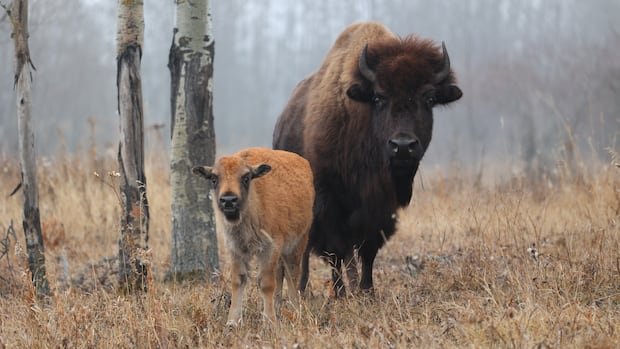

Once abundant across North America, bison faced near-extinction due to relentless hunting, leading to their decline and eventual fragmented return to their once-prevalent habitats.
A recent study, detailed in the journal Science, analyzed the DNA of 160 bison genomes, tracing their genetic history over 20,000 years. Led by paleogeneticist Jonas Oppenheimer and the Paleogenomics Lab at the University of California, Santa Cruz, the research involved nearly 40 scientists, mainly from Canada.
The objective is to use these genetic insights to enhance conservation efforts, aiming to support the resilience and survival of bison populations in the future.
Current bison herds, once highly interconnected, now exist in isolated groups under human management, posing challenges to their genetic diversity and adaptability.
The genetic analysis showed that historical bison populations were genetically homogeneous. In contrast, today’s bison exhibit significant genetic variations based on their specific herds, a consequence of past human-induced population bottlenecks.
Genetic Revelations
The genome sequencing unveiled how the biological diversity of bison has evolved over time. Researchers collected DNA samples from ancient bison remains and existing herds in various regions, including managed populations and wild herds in Canada and the United States.
The study involved sequencing 115 ancient bison genomes and 45 modern ones, combining them with existing genetic data to create a comprehensive genetic map of the species.
Chris Jass, a paleontologist at the Royal Alberta Museum, emphasized the study’s significance in understanding the bison’s evolutionary journey and the importance of collaborative research efforts.
By examining the genetic impact of past population declines on bison, researchers revealed how the species’ structure, diversity, and genetics have been influenced.
Historical Shifts
Historically, bison freely roamed North America, maintaining genetic uniformity until their population plummeted in the late 19th century due to extensive hunting and government actions.
Despite the initial decline, genetic diversity persisted, but modern bison herds now harbor distinct genetic signatures, a consequence of their fragmented and isolated populations.
The study debunked the common assumption of significant cattle ancestry in bison, highlighting the substantial genetic divergence between wood bison and plains bison, which adapted to different ecological niches over time.
Human interventions further influenced the genetic mixing between wood bison and plains bison, underscoring the importance of managing them as distinct subspecies.
‘Conservation Strategies’
The study’s co-author, Greg Wilson, emphasized the importance of leveraging these genetic findings to enhance conservation efforts and restore genetic connectivity among bison herds.
Efforts such as Bison Integrated Genomics aim to preserve bison populations through genetic conservation, emphasizing the need to prevent inbreeding and sustain genetic diversity among the isolated herds.
By utilizing ancient genomes as benchmarks for managing herds, researchers hope to facilitate the return of bison populations to their natural genetic diversity, promoting their resilience and long-term survival.