

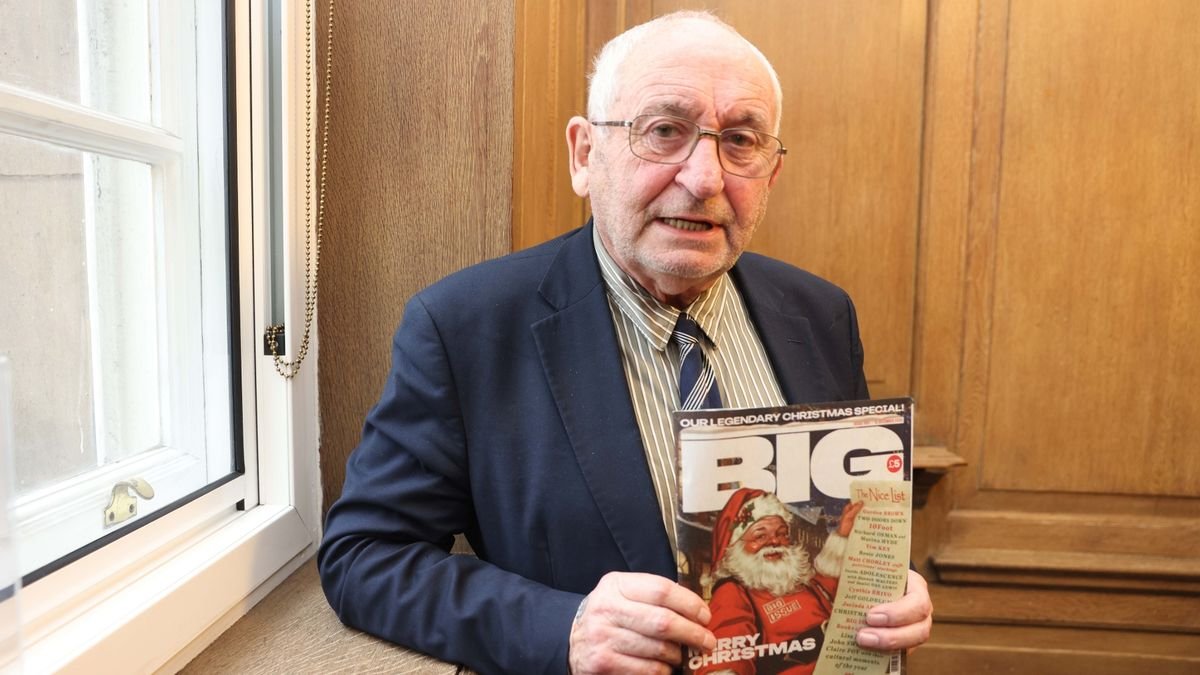

Lord John Bird, the founder of the Big Issue, expressed his commitment to combating poverty as he advocates for the establishment of a dedicated government department focused on eradicating poverty in the UK. Lord Bird, aged 79 and raised in a Notting Hill slum, proposed the creation of a “ministry of poverty prevention and cure” to address the persistent issue of poverty in the country.
Highlighting the absence of a government department solely dedicated to poverty eradication since the post-World War II welfare state establishment, Lord Bird criticized the current Department for Work and Pensions (DWP) for its reactive approach rather than proactive measures to prevent poverty inheritance and break the cycle of poverty for future generations.
Lord Bird, co-founder of Big Issue in 1991, emphasized the need for concrete government targets to address child poverty effectively. Despite recent government initiatives to lift over 550,000 children out of poverty through measures such as expanding free school meals and eliminating the two-child benefit limit, Lord Bird insisted on legally binding poverty targets akin to the net zero law duty.
In the upcoming year, Lord Bird plans to push for his amendment on children’s wellbeing and education in the House of Lords to hold the government accountable through measurable Key Performance Indicators (KPIs) for poverty alleviation efforts. He stressed the importance of objective assessments over subjective evaluations, urging for tangible progress in poverty reduction strategies.
When questioned about the personal nature of his advocacy, Lord Bird affirmed his unwavering dedication to dismantling poverty and ensuring a better quality of life for future generations born into disadvantaged circumstances. He underscored the necessity of advocating for concessions and support for the most vulnerable individuals to improve their living conditions and opportunities.
A government spokesperson responded to these concerns by highlighting ongoing efforts to address poverty directly, including raising the national living wage and reducing energy bills to support low-income families. Acknowledging the need for further action, the government is committed to removing barriers to opportunity, such as the two-child limit, and implementing comprehensive measures to lift children out of poverty by 2030 while enhancing employment opportunities nationwide.