

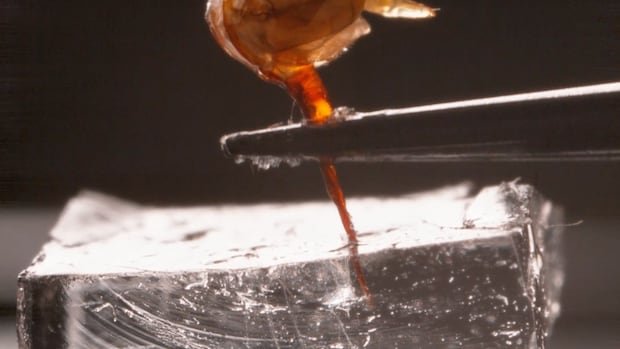

A western honey bee’s stinger is a last-resort weapon that embeds itself in flesh to deliver venom, often leading to the bee’s demise. Recent research in the Proceedings of the National Academy of Sciences sheds light on the effectiveness of this defense mechanism. Fiorella Ramirez Esquivel, a postdoctoral researcher at Macquarie University, emphasized that modern cameras enabled the filming of bee stingers in action, capturing rapid movements.
High-speed cameras were crucial for capturing bee stings, as they happen quickly. The study utilized live honey bees, extracting their stingers and observing the venom sac’s translucence and stinger structure under strong lighting. The experiments required swift actions due to the stinger’s short activity window once separated from the bee’s body.
The research revealed a double-piston design in the bee’s stinger, where specialized valves work simultaneously to drive the stinger deeper and pump venom into the target. This intricate mechanism involves the valves moving past each other to ensure venom flow and stinger penetration. The study’s findings, including the stinger’s prolonged activity and pheromone release, provide insights into bee defense strategies.
The western honey bee’s stinging mechanism serves as a sacrifice to protect the larger colony, showcasing the evolution of a unique defense system. The study’s detailed analysis of bee stingers through modern technology unveils the complexity of this natural weapon. Researchers anticipate that these discoveries could lead to potential medical applications in the future.
The long history of studying honey bees dates back thousands of years, with advancements in scientific classification and understanding their anatomy. This research not only deepens our knowledge of bee behavior but also raises questions about stinging mechanisms in other honey-producing bee species worldwide. The study’s innovative approach may pave the way for further exploration into bee adaptations and behavior.