


A remarkable discovery of a vast nursery housing billions of baby sea cucumbers has been made near Sanikiluaq, Nunavut, shedding new light on the species and potentially offering economic opportunities for the Arctic community. Lucassie Arragutainaq, the head of the Sanikiluaq Hunters and Trappers Association, revealed that while the community consumes small sea cucumbers regularly, the larger adult specimens could be valuable for export to markets in China and Japan.
In a bid to explore the potential inclusion of sea cucumbers in plans for a commercial scallop fishery, researchers from Memorial University in Newfoundland were invited by the association to investigate Cucumaria frondosa, commonly known as the Orange-footed sea cucumber, in 2018. Led by Annie Mercier, a professor at the university’s ocean sciences department, the team, with guidance from local residents, stumbled upon the nursery the following year, much to their excitement.
Mercier expressed enthusiasm, noting that sea cucumbers remain a poorly understood group with about 1,800 species globally, making nursery grounds elusive due to the cryptic nature of these creatures. The team’s findings, detailed in a 2023 article published in the peer-reviewed journal Polar Science, marked the first documented discovery of a Cucumaria frondosa nursery in the vicinity of Sanikiluaq.
The baby sea cucumbers, measuring less than two millimeters in length, were described as tiny pink specks nestled on rocks and mussel shells near the surface, in contrast to the adult counterparts dwelling deeper in the ocean. Mercier emphasized the vast expanse of the nursery, estimated to extend along the Belcher Islands archipelago’s coastline, positioned between one to three meters below the sea’s surface.
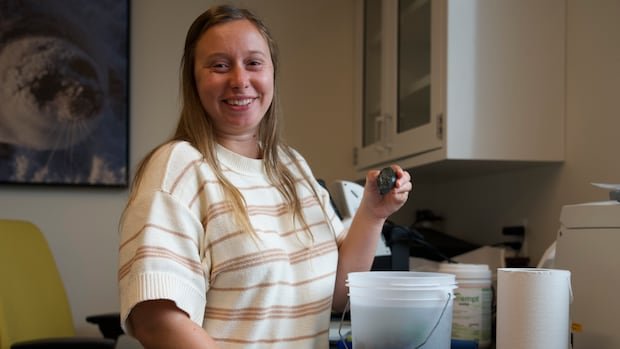
The data collected from these discoveries holds significant value for species management and scientific exploration. Researchers like Joséphine Pierrat, a postdoctoral researcher at Memorial’s ocean sciences department, highlighted the abundance of baby sea cucumbers during a recent research trip to Sanikiluaq, underscoring the importance of community involvement in data collection and analysis.
The Sanikiluaq community is considering incorporating sea cucumbers into their existing scallop fishery plans, a process that entails navigating through regulatory frameworks for sustainable resource management. Arragutainaq emphasized the potential benefits of a sea cucumber fishery, including job creation and economic opportunities for residents.
Ultimately, the collaboration between researchers and the local community in uncovering and studying the sea cucumber nursery represents a significant step towards harnessing the economic and ecological potential of these marine organisms in the Arctic region.