


As the lyrics suggest, being green is quite a challenge.
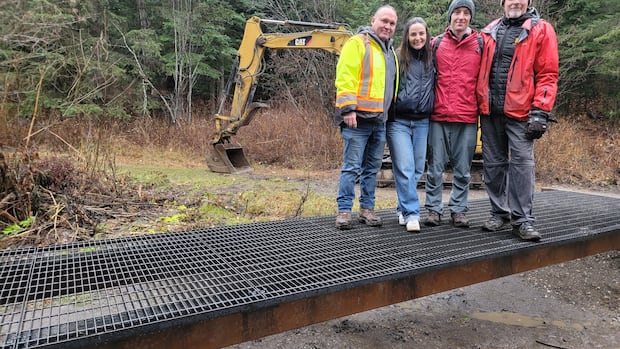
A newly constructed bridge that crosses an amphibian migration route in a park located in Prince George is anticipated to provide small salamanders, toads, and frogs with a better chance of survival each summer.
Now, individuals wearing heavy footwear can utilize the bridge to traverse above the trail, thereby preventing the accidental crushing of vulnerable young amphibians as they journey from the lake to the forest during July and August.
This eight-meter-long bridge is situated on the northwest side of Shane Lake in Forests for the World, a vast natural park that is home to wildlife such as black bears, moose, and deer, as well as smaller species like long-toed salamanders, western toads, wood frogs, and Columbia spotted frogs.
The project, which involved collaboration between the City of Prince George, local firm Nahanni Construction, and other stakeholders, saw the bridge construction completed on November 12.
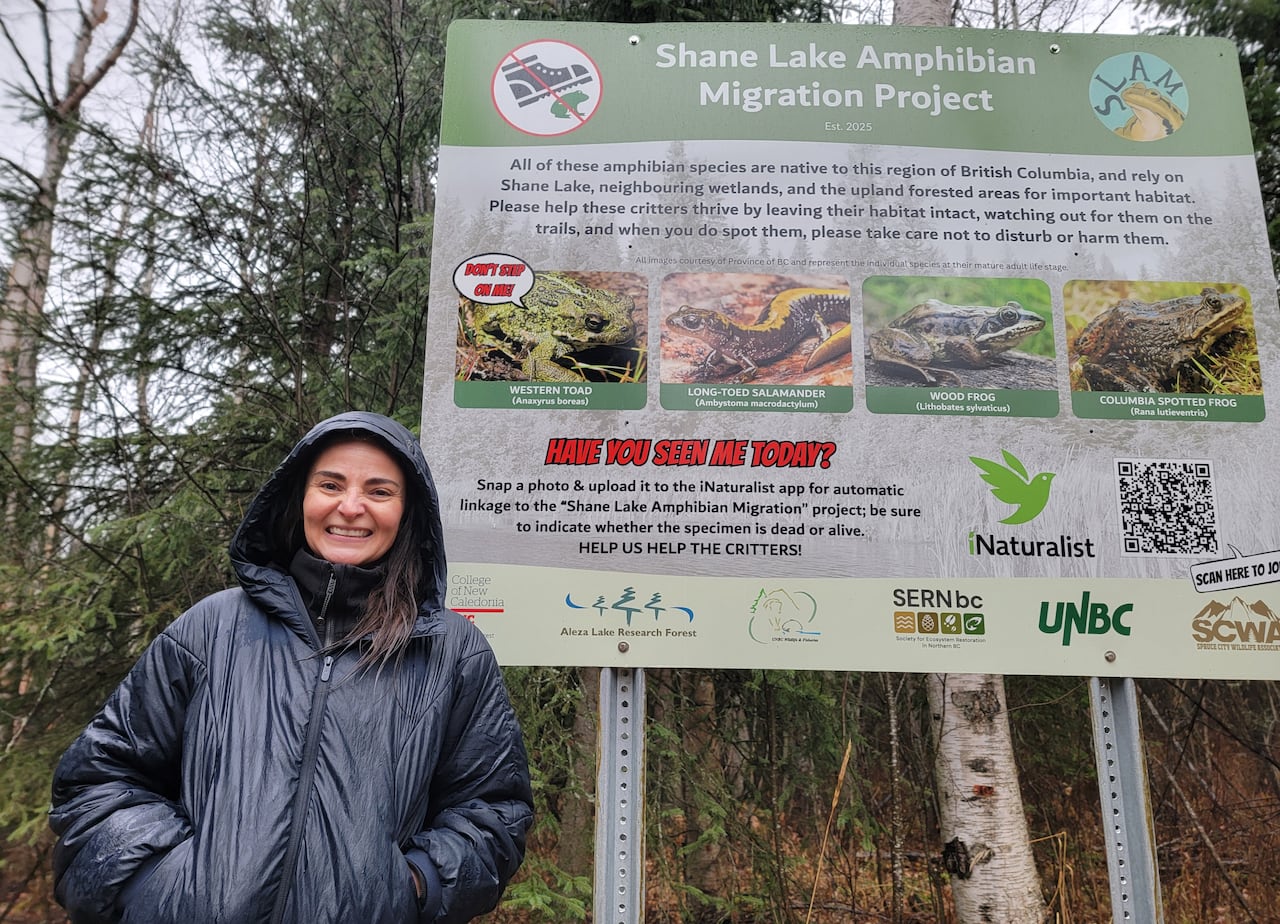
Ashley Sutherland installed signs in various spots within Forests for the World park in Prince George, B.C., to inform visitors about the importance of avoiding stepping on small frogs and other amphibians near Shane Lake. (Jason Peters/CBC)
Among the collaborators is Ashley Sutherland, a local resident and forester who initially highlighted the issue of trampling deaths after walking her dogs around Shane Lake in early August 2022.
“I witnessed it firsthand, and honestly, it made me furious,” Sutherland recounted. “After returning to the parking lot, I emailed the city, and that’s the reason behind this initiative. It frustrated me that no one was addressing the problem,” she expressed.
Sutherland admitted she never anticipated becoming the voice for this cause. However, with backing from local and provincial entities, she successfully organized the installation of signs in the park to raise awareness about the trampling problem.
Now, the bridge is operational and being utilized.
From Sutherland’s viewpoint, this is a prime example of what can be achieved when individuals or organizations unite to address an issue.
“[The bridge] signifies a genuine partnership with the City of P.G., and it represents taking the right action,” she stated.
“Thanks to this collaboration with the city, and involvement from numerous organizations and individuals, it’s truly remarkable to participate in meaningful change.”
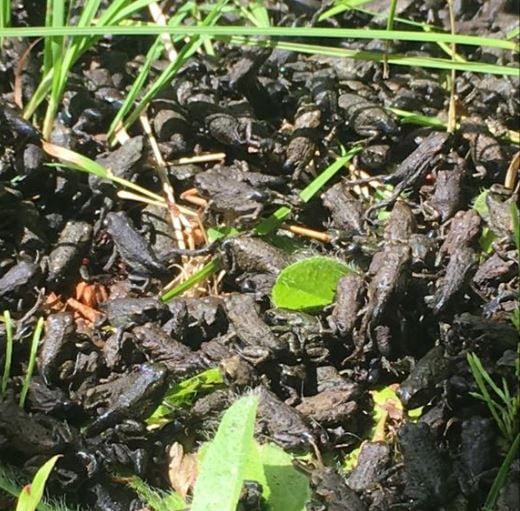
Western toads, wood frogs, and Columbia spotted frogs are among the species that utilize amphibian migration paths around Shane Lake in Forests for the World park in Prince George, B.C. This image was captured near the lake’s edge. (Submitted by Ashley Sutherland)
Small size and green color create challenges
During their migration in July and August, the salamanders, toads, and frogs at Shane Lake do not just travel in small numbers.
According to Sutherland, they migrate in the thousands, and their diminutive size and coloration make them hard to spot, increasing the likelihood of being stepped on by those using the trails.
“Data from 2025 indicated that the main loop trail around the lake experienced mortality rates as high as 12.8 percent,” Sutherland noted, adding that not all of those fatalities were due to trampling.
In the broader ecological context around Shane Lake, Sutherland emphasizes that aiding the local amphibians during their migration from the lake to the woods is crucial, as only about one in every hundred reaches adulthood.
“So even though we observe thousands on the trail here, that does not necessarily indicate that amphibian populations are thriving in terms of their reproductive success,” she explained.
-
5 million amphibians and reptiles relocated due to B.C. development, with no obligation to monitor survival: study
-
New wildlife tunnels built near Tofino, B.C., protect amphibians from a perilous Frogger-like situation
Although the total cost of the bridge remains undisclosed, Dean Price from Nahanni Construction mentioned that the City of Prince George contributed approximately 30 percent of the expenses, while the remainder was funded through donations.
Michael Le Morvan from the City of Prince George’s parks department described the initiative as “wonderful,” and indicated that plans are underway for a second bridge at another amphibian crossing.
“We are planning to construct another one, likely 100 meters from this location,” he revealed.