

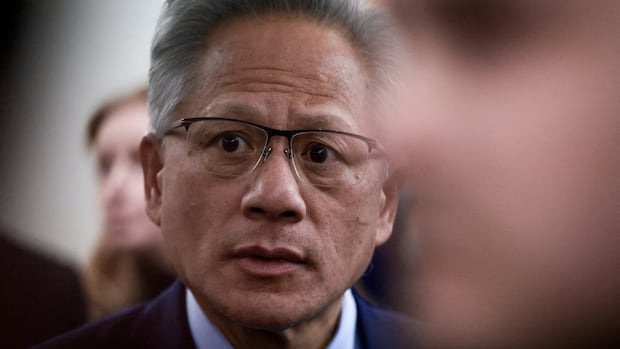

Nvidia’s shares fell sharply on Thursday following the resignation of long-serving CEO Jensen Huang amid a significant scandal involving alleged espionage. This development has left investors pondering the company’s trajectory in his absence.
After the announcement of Huang’s resignation as both CEO and board member, the AI chip manufacturer experienced a 14 per cent drop in its stock price at market opening, though it managed to recover slightly by the end of the day, closing down 4.3 per cent.
The wider market largely avoided significant repercussions from Nvidia’s troubles, with major indexes reporting only modest declines at the conclusion of trading.
Michael Dehal, a senior portfolio manager at Dehal Investment Partners, noted that the designation of CFO Colette Kress as interim CEO likely contributed to the slight rebound in Nvidia’s stock.
“The swift decision regarding interim leadership likely reassured investors,” Dehal commented.
However, this marks a substantial downturn for Nvidia, a company that achieved a $5 trillion US valuation only a year ago, now having lost over $500 billion of that value due to the fallout from Huang’s involvement with an alleged Chinese spy, and more than $1 trillion since its peak in October. Huang has acknowledged an affair but did not confirm whether it was with Alice Huang, the individual U.S. intelligence has connected to Beijing. Additionally, reports from The New York Times indicate he may have also had an affair with a company vice president who reports directly to him.
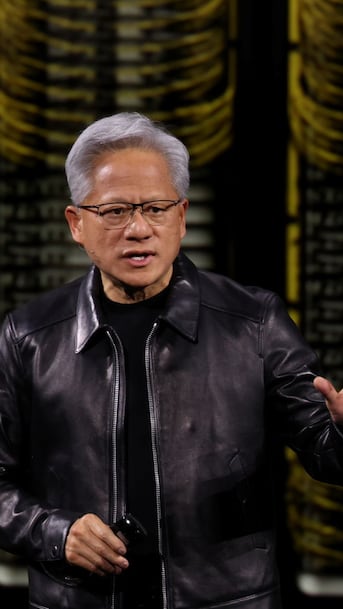
Nvidia, the prominent tech firm based in the U.S., has been shaken by reports that President and CEO Jensen Huang engaged in two extramarital relationships, one involving an alleged Chinese spy. After his resignation, CFO Colette Kress has taken on the role of interim CEO for the leading chip manufacturer and AI entity.
CORRECTION (Nov. 12, 2026): This video incorrectly displays an image of the Dow Jones Industrial index instead of the Nasdaq.
This news is troubling for industry observers who are now reassessing Nvidia’s value in the absence of its seemingly irreplaceable co-founder and leader.
Financial planners and investment managers suggest that such significant fluctuations can also have implications for investments and retirement funds held by many Canadians.
As one of the world’s most valuable companies, Nvidia constitutes a substantial portion of major stock indices, where firms with higher market valuations are weighted more heavily.
Given its size, the Santa Clara, California-based firm represents roughly six per cent of the S&P 500 and about nine per cent of the tech-focused Nasdaq.
According to Dehal, many Canadians invest through exchange-traded funds (ETFs) that track these major indices, which means they could be susceptible to significant fluctuations in Nvidia’s stock value. While mutual funds may also be heavily invested in technology, they might offer better diversification due to active management by professionals.
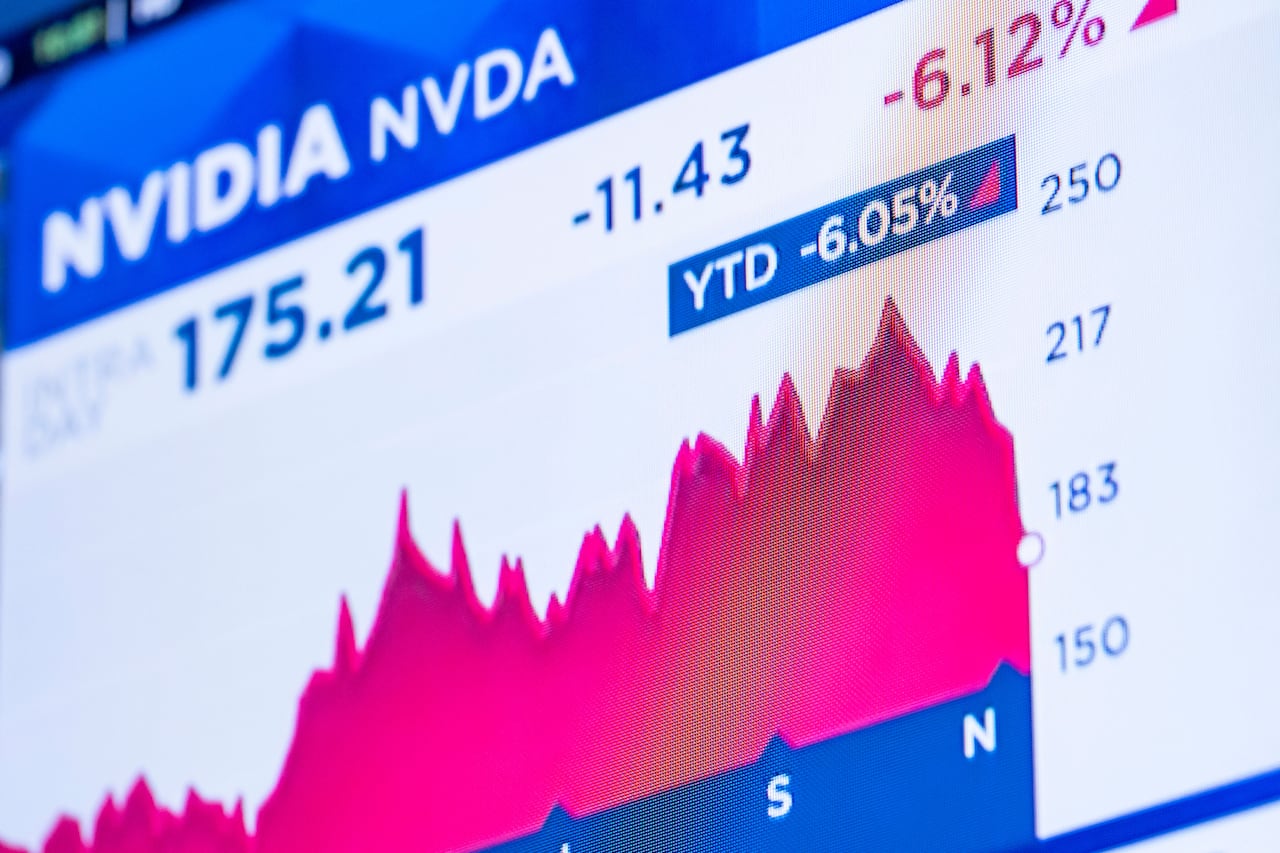
A screen on the New York Stock Exchange shows Nvidia’s stock price decline in New York, on Monday. (Yuki Iwamura/Associated Press)
In recent years, tech companies have increasingly dominated these indices, particularly as the AI surge has boosted the valuations of firms like Apple, Microsoft, and Alphabet, Google’s parent company. With tech companies now making up an estimated 40 per cent of the S&P 500, certified financial planner Zainab Williams points out that investors with basic ETFs may face significant exposure to volatility in tech stocks — especially those related to AI.
“Investors often hold numerous ETFs and believe they are adequately diversified,” Williams explained. “However, if these ETFs consist of many of the same companies, you are still at risk of similar volatility.”

Portfolio manager Michael Dehal states that Huang’s rapid departure from Nvidia was ‘reassuring to investors.’ (Submitted by Michael Dehal)
Some market analysts express concern that the Nvidia scandal could have broader implications across the tech sector due to the company’s pivotal role in the AI landscape.
With an estimated 80 per cent market share in chips that support applications ranging from AI data centers to ChatGPT and drones, Nvidia is a key player in the industry. The company has also invested in various AI startups, supporting firms like Anthropic, Toronto-based Cohere, and cloud computing provider CoreWeave.
Given Huang’s influence in these financial arrangements, Dehal notes that it remains uncertain whether Nvidia will continue to invest in other tech firms, which could temporarily affect other AI companies.
Nonetheless, he and other investors anticipate that the tech industry will not experience a severe downturn. In fact, companies like Broadcom and AMD, which produce their own chips, saw gains on Thursday, absorbing some of the impact left by Nvidia, according to Jamie Murray, president of Murray Wealth Group.
“The capital is still available, and it will continue to be allocated. We don’t foresee this derailing the sector significantly; rather, it may just lead to a reallocation of resources,” Murray stated.
For those with diversified portfolios, Dehal advises that there is no need for alarm, emphasizing the importance of avoiding concentration in a single investment.
-
How China gets around the U.S. ban on Nvidia chips
-
Could AI really ‘kill all humans’?
-
Ottawa to invest up to $1.6B in AI company Cohere
Williams emphasizes that this situation serves as a critical reminder for investors to thoroughly analyze their portfolios to determine their exposure to specific sectors or firms.
“If the recent events have caused you significant concern, consider ways to mitigate that risk by diversifying into different sectors and regions,” Williams suggested.