

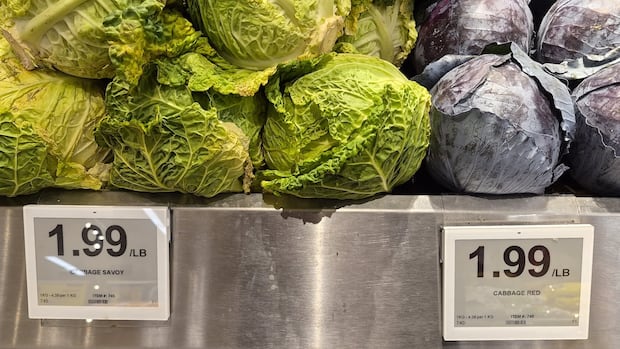

Loblaw has changed its mind about removing country-of-origin labels from produce displays in its stores, responding to significant customer dissatisfaction.
The uproar started earlier this month when customers observed that the spaces on produce signs, which previously indicated the origin of the food, were now blank.
“We deserve to know what we are consuming,” stated Karla Hennig from Penticton, B.C. A loyal “Buy Canadian” shopper, she expressed her disappointment upon discovering the absence of this information last week at her local Superstore.
“I find it incredibly disrespectful of my time and money,” she remarked. “They want my support, but they are not providing what I need.”
Produce signage at Loblaw locations across the country reflected this change, except in Ontario and Quebec; the largest grocery chain in Canada continued to offer origin information in those provinces due to provincial regulations requiring certain labeling transparency.
In other regions, many Loblaw customers took to social media to criticize the policy alteration — a move made by the retailer just before the collapse of Canada-U.S. trade negotiations, igniting a fresh trade conflict and renewed emphasis on purchasing Canadian goods.
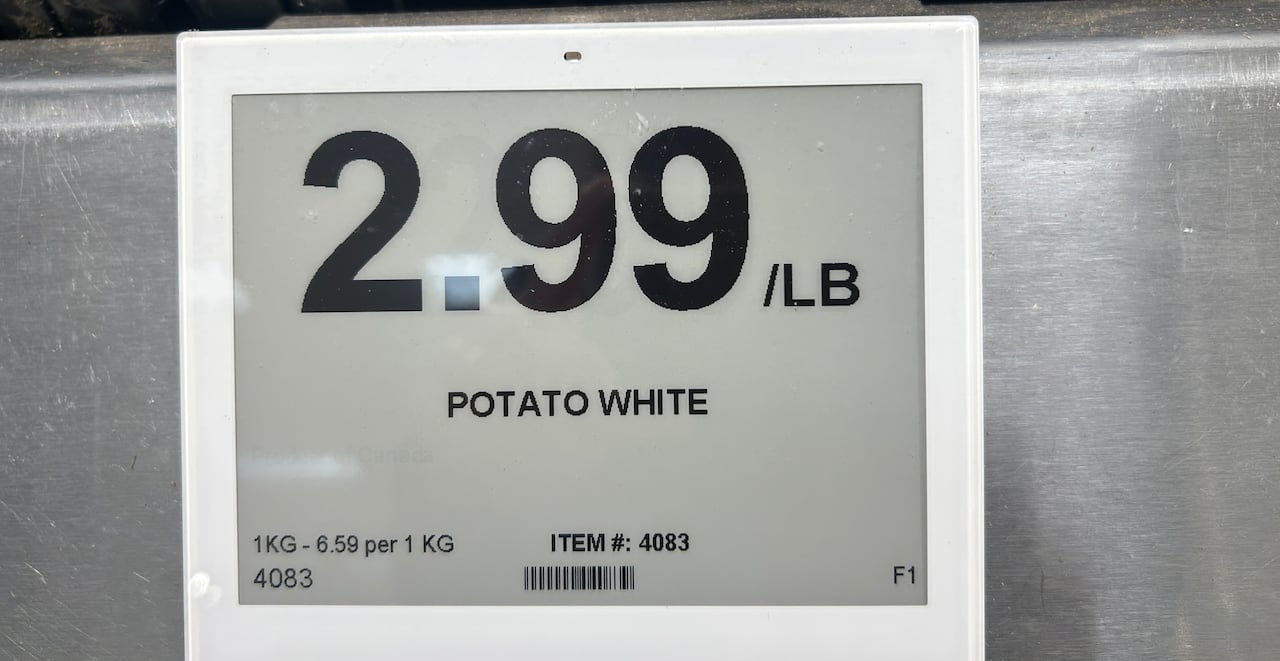
Customer dissatisfaction arose earlier this month when shoppers noticed the area on produce displays, which previously indicated where food was grown, had been left unmarked. (Litsa Sourtizis/CBC)
After realizing that produce at his local Real Canadian Superstore lacked country-of-origin labels, Edmonton resident Karl Mueller shared his concerns on Facebook and sent a letter to the chain’s headquarters.
On Monday, he mentioned that the recent trade tensions have only solidified his determination, arguing that this is not the right moment for Superstore to reduce in-store food labeling.
“It feels like a very un-Canadian move,” he expressed. “There’s an economic attack on us. As an average citizen, my only means of resistance is to support Canadian businesses and shop locally.”

After noticing the absence of country-of-origin labeling for produce at his local Real Canadian Superstore, Edmonton resident Karl Mueller posted a complaint on Facebook and sent a letter to the chain’s headquarters. (Emilio Avalos/CBC)
On Monday, agricultural economist Ellen Goddard indicated that Loblaw might reconsider its decision.
“They are likely thinking, ‘Wow, we chose the wrong time to eliminate the labeling,'” remarked Goddard, a professor at the University of Alberta in Edmonton.
“The emotions are running much higher now.”
Goddard’s forecast proved to be correct. Following an inquiry from CBC News to the retailer, Loblaw replied via email that, “as Canada enters a new phase of trade uncertainty with the United States,” the company is taking measures to assist customers in purchasing Canadian goods.
The retailer stated that these initiatives include reinstating country-of-origin details in produce sections and marking American products impacted by U.S. tariffs with a “T” symbol on the shelf labels.
The announcement was met with cautious optimism from some customers.
“If Loblaw has genuinely altered its policy, that would be fantastic,” said Mueller. “It demonstrates the influence that everyday people can exert when they put their money where their beliefs are.”
He added that he would reserve full celebration until he sees the return of country-of-origin labeling for produce at his local Superstore.
Loblaw’s earlier stance
Although Loblaw reversed its produce labeling policy on Tuesday, the retailer had defended its previous choice just a day prior, citing the difficulties involved.
“Sourcing can frequently change due to seasonality, supplier modifications, and availability,” stated the retailer in an email on Monday.
Loblaw did not clarify why it could still provide source country information for produce in Ontario and Quebec despite these challenges.
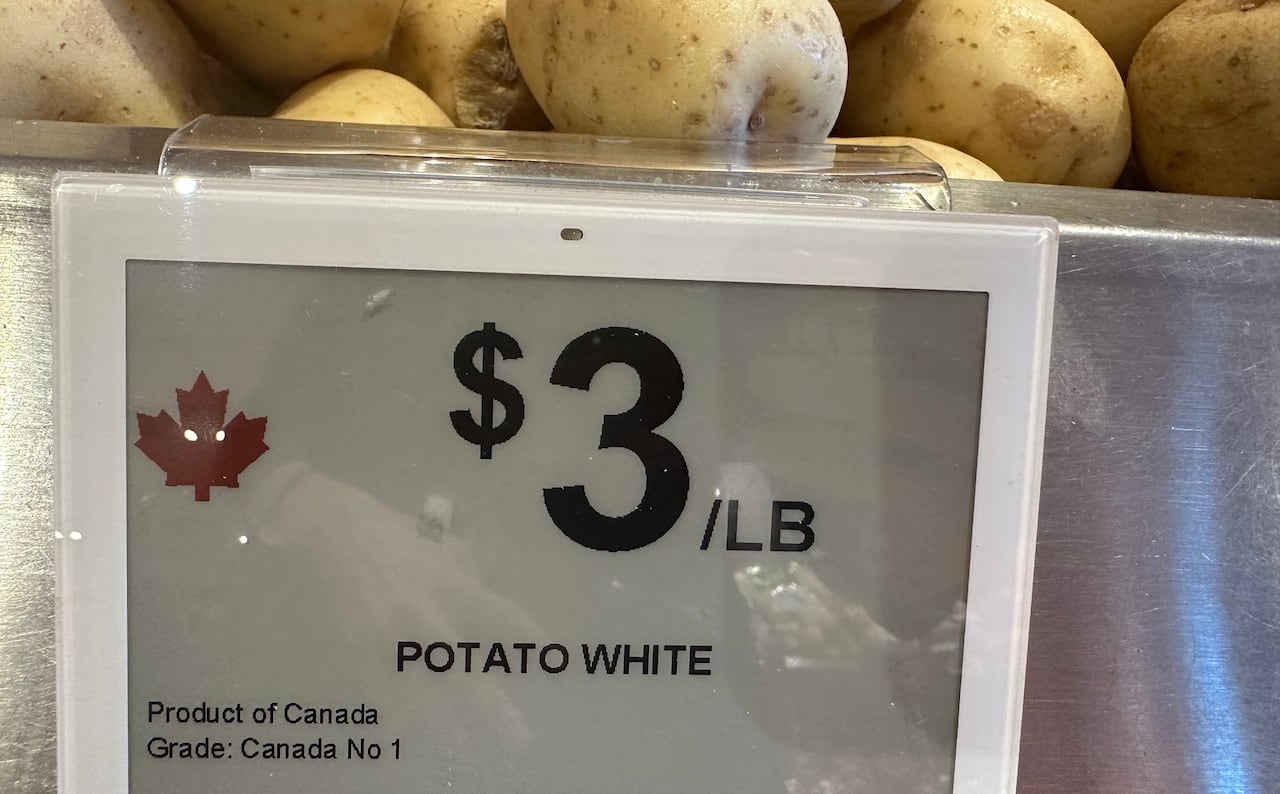
Loblaw continues to provide origin details in Ontario and Quebec due to provincial regulations requiring certain labeling transparency. (Sophia Harris/CBC)
The retailer also mentioned that customers can find “the most current” country of origin information on individual produce stickers or packaging, or by consulting a store employee.
However, Hennig stated that when she attempted to shop for broccoli and lettuce last week at the Penticton Superstore, she was unable to locate the information on the products.
“There were no indicators at all.”
When she asked two staff members for assistance, Hennig reported that neither knew the origin of the produce.
“I was very upset,” said Hennig, who left the store without making any purchases.
“I felt disregarded,” she expressed, adding that she didn’t blame the store staff, who had no role in the policy change.
What led to the change?
Loblaw’s initial decision to eliminate produce labeling came after facing regulatory issues. Earlier this year, the Canadian Food Inspection Agency (CFIA) issued two $10,000 fines and two warnings to four separate Loblaw locations for incorrectly marketing imported food — including produce — as Canadian.
The penalties, especially the fines, garnered media attention. Goddard, the agricultural economist, suggests that the coverage likely prompted the retailer to initially forgo country-of-origin signage for produce.
“I believe the last thing they want is to be featured in the newspaper for potentially misleading customers,” she stated. “Their business relies on trust.”
Goddard speculated that Loblaw did not intend to mislead customers, but rather assessed that the challenges of providing produce labeling outweighed the potential risks.
“They may be feeling overwhelmed trying to make it work,” she noted.

Agricultural economist Ellen Goddard suggested on Monday that Loblaw might reconsider its decision to eliminate country-of-origin labeling following the breakdown of trade talks between Canada and the United States. (David Bajer/CBC)
Loblaw is not the only retailer to reduce source country information due to regulatory scrutiny.
Earlier this year, the grocery chain Sobeys stopped using maple leaf symbols on store shelf signs to promote Canadian goods. This decision followed accusations that the retailer had promoted imported food as Canadian and a subsequent CFIA investigation.
Is it legal?
Despite increasing criticism, the CFIA has clarified that federal regulations do not compel grocers to display a product’s country of origin on store signage, and permit the sale of bulk produce without any source country information.
This stance has led some consumers to call for new federal regulations requiring grocers to offer origin details for bulk produce.
“I would like to see legislation mandating country of origin labeling, to ensure consumers know exactly where the product is sourced,” said Mueller in Edmonton. “We should make this straightforward for Canadians, not complicated.”