



This week’s episode of Quirks & Quarks features Bob McDonald:
Climate change causes unusual shifts in the Earth’s movements in the North
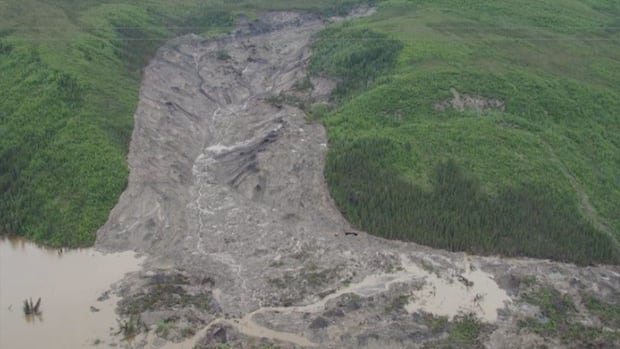
In the Northwest Territories of Canada, the permafrost is experiencing unprecedented failures, leading to a new kind of landslide termed permafrost detachment slides. This frozen soil or rock, which constitutes approximately 50% of Canada’s land area, is melting as Arctic temperatures rise. Consequently, large sections of this frozen material, at times comparable in size to houses, are becoming dislodged and sliding down inclines. Geoscientist Duane Froese from the University of Alberta cautions that such occurrences will likely become more frequent over time. This research has been documented in the journal Geophysical Research Letters.
Sperm whales produce bubbles while sleeping, and now we understand why
Sperm whales exhibit an unusual behavior of sleeping in a vertical position in the water. Their enormous heads, which are filled with oil, act like a buoy, causing their heads to rise to the water’s surface when they are motionless. Previous studies have noted that they tend to release bubbles while resting, prompting biologist Noémie Freymond to explore this phenomenon for her master’s thesis at the University of St. Andrews. She discovered these whales generate bubbles while sleeping to help them remain submerged beneath the water’s surface. Her findings were published in the Journal of Experimental Biology.
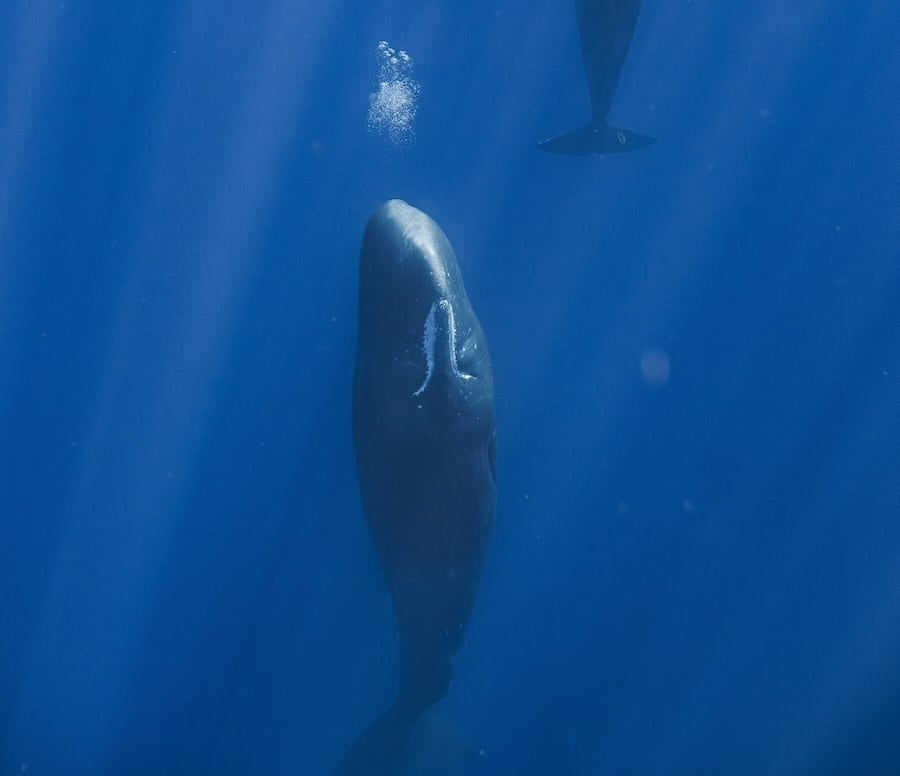
Sperm whales rest vertically. Recent studies indicate that they release bubbles during this time to prevent themselves from rising to the surface while they sleep. (Stéphane Granzotto)
Reducing the speed of wind turbine blades could enhance energy recovery in variable winds
Fluctuating winds can lead to financial losses for wind farm operators due to decreased revenue. To assess potential improvements, John Kurelek, a mechanical engineer from Queen’s University, along with his team, examined a small wind turbine in a pressurized wind tunnel to accurately simulate how much energy is lost with changing wind directions. Their study, featured in PNAS Nexus, revealed that by reducing the blade speed, they could enhance power generation.

Wind turbines located near Pincher Creek, Alberta. (Jeff McIntosh/The Canadian Press)
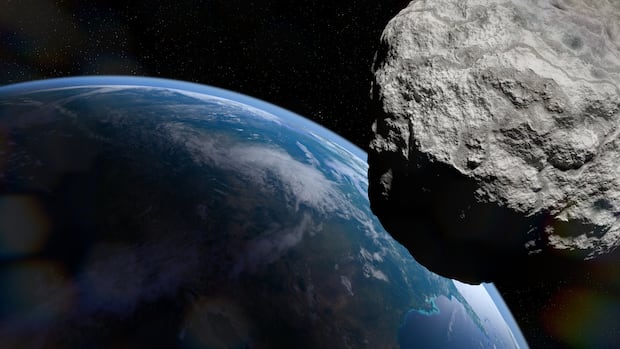
Insights from a new lunar crater about incoming asteroids — and potential nuclear solutions
In the spring of 2024, the Lunar Reconnaissance Orbiter (LRO) took before and after images of a significant asteroid impact on the moon. Upon further analysis by UCLA planetary scientist David Paige, a seven-kilometer wide ring of displaced regolith was discovered surrounding the 222-meter impact crater. His research, published in Science Advances, aims to enhance our understanding of the drastic history of asteroid impacts within our solar system.
Beyond tracking asteroids, scientists are exploring methods to protect against potentially dangerous ones. Physicist Isaiah Santistevan from Lawrence Livermore National Laboratory modeled the potential impact of a nuclear explosion on an asteroid large enough to threaten a city. In the vacuum of space, detonating a nuclear device 10 or 25 meters from the asteroid could eliminate the risk. The X-rays generated by the explosion would vaporize the asteroid’s surface, redirecting it away from a collision course with Earth, similar to a rocket’s propulsion. This study is detailed in The Planetary Science Journal.
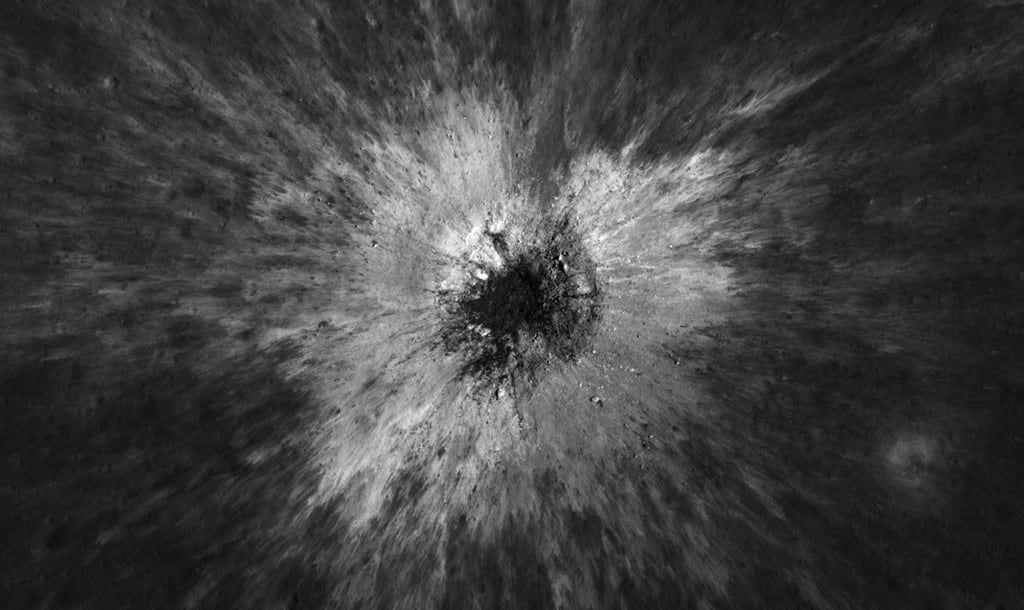
This lunar crater, identified in October 2025 by Robert Wagner, measures 222 meters in width, making it the largest newly discovered crater in the solar system. (Robert Wagner/Intuitive Machines/NASA Goddard/)
Birdsong exhibits patterns akin to human speech
Around the world, human speech exhibits consistent patterns irrespective of the language. Interestingly, birdsong does as well. A recent investigation analyzed the songs of 367 bird species alongside 52 languages, uncovering common patterns in both, such as sound sequences, coordinated vocal movements, and pitch variations. Biologist Jon Sakata and his team at McGill University utilized a vast database of global birdsongs compiled by citizen scientists for their research, which was published in the journal Science.
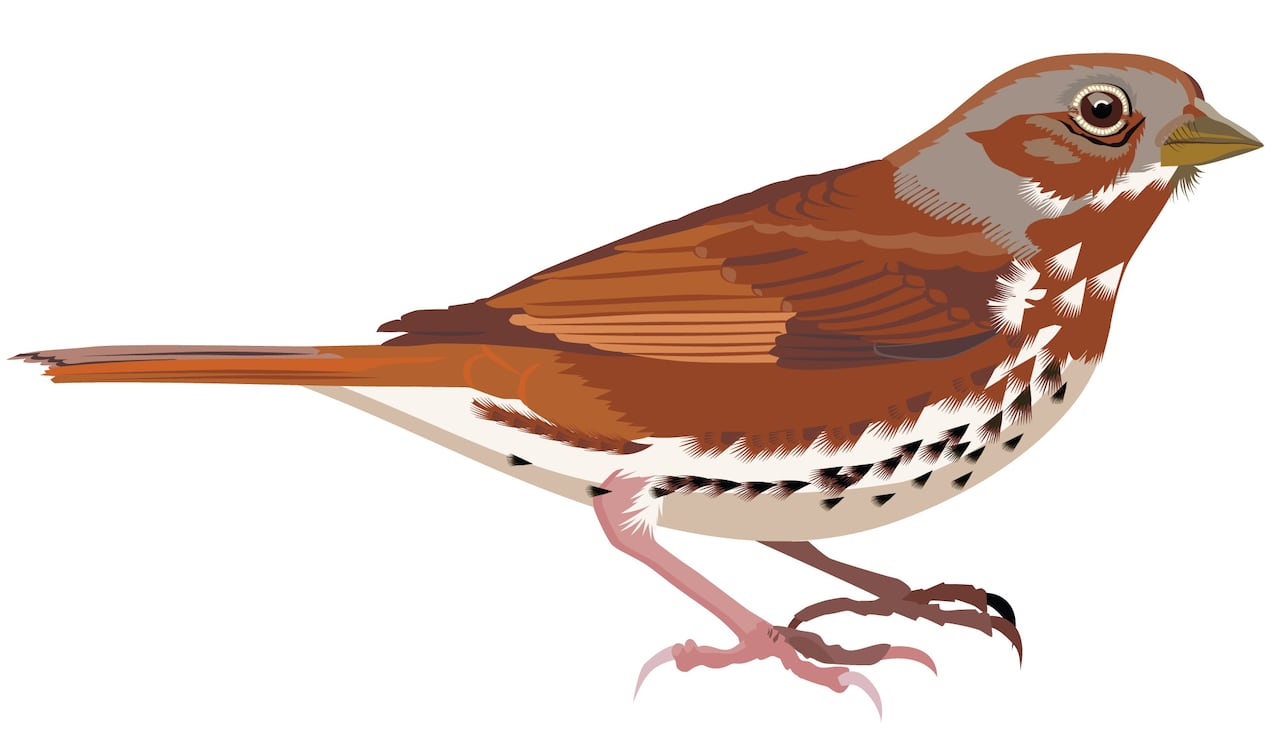
A depiction of a Fox Sparrow, a bird species found throughout North America. (Damond Kyllo)