

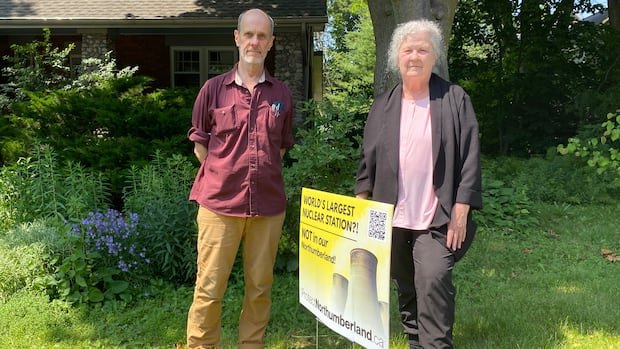

Earlier this year, the Ontario government unveiled plans for a potentially massive nuclear power plant in a charming community of around 18,000 residents. The announcement was met with enthusiasm from officials, with the province’s energy minister praising it as a step towards a secure energy future. However, for many long-time residents of Port Hope, the news stirred memories of the town’s complicated history with the nuclear industry.
Faye More, a 75-year-old resident, expressed her outrage at the announcement, highlighting the community’s historical struggles with nuclear operations. The town has been dealing with the legacy of past radioactive contamination, a situation that residents fear will be exacerbated by the new project.
Port Hope has a deep-rooted connection to radioactive materials dating back to the 1930s when a radium refinery plant was established in the area. Over the years, the town has grappled with contaminated soil and building materials used in various public spaces. Efforts to address this contamination have been ongoing, including the Port Hope Area Initiative aimed at cleaning up the historic radioactive waste.
The proposed nuclear plant has sparked mixed reactions in the community. While some officials believe it will bring economic benefits and adhere to stringent safety standards, critics, including residents like Faye More, are concerned about the potential risks and environmental impact. They argue that the town has already borne the brunt of past nuclear activities and should not be subjected to further expansion in the sector.
Mayor Olena Hankivsky has emphasized the distinction between the ongoing cleanup efforts and the proposed nuclear project, noting that the latter would adhere to modern regulatory standards. However, residents like More remain skeptical and are actively opposing the plant’s development.
As the debate continues, residents are advocating for transparency, environmental justice, and community engagement in decision-making processes. The future of the proposed nuclear plant remains uncertain as local voices raise concerns and push for a thorough assessment of the project’s potential impacts.