

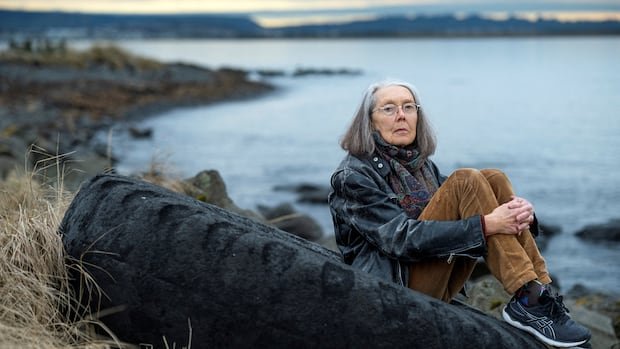

Anne Carson, the 76-year-old Canadian writer and artist who was awarded the Nobel Prize for literature on Thursday, has consistently stayed true to her unique identity, according to friends and admirers. This has sometimes led to her not receiving full recognition or understanding in her home country.
Carson’s work transcends traditional genres, seamlessly moving between prose, poetry, and essays, often blending them within the same piece. Her creations involve fictional dialogues between ancient classical figures and contemporary stars, poetry exploring themes of love and loss, and reflections on human idiosyncrasies, including her own.
In addition to her artistic endeavors, Carson is a respected scholar and translator of Ancient Greek, especially renowned for her work reviving the fragments of the poet Sappho, notably showcased in her book “If Not Winter.” International accolades began early in Carson’s career, with her debut book “Canicula di Anna” winning the Betty Colladay Award from the Quarterly Review of Literature in 1984. Subsequent honors include the Lannan Literary Award for Poetry in 1996, a Guggenheim Fellowship in 1998, and a MacArthur Fellowship in 2000, also known as the “Genius Grant.”
Despite the initial lack of recognition in Canada, Carson remained unfazed. She once stated in a 2000 interview with The Globe and Mail that she preferred to operate away from the limelight. Lucille Friesen-King Edwards, who co-founded The Word bookstore in Montreal, where Carson frequented during her time at McGill University, noted Carson’s steadfast commitment to her unique artistic path.
Over time, Canada caught up with recognizing Carson’s contributions, honoring her multiple times with the Canadian Griffin Poetry Prize and the A.M. Klein Prize for Poetry from the Quebec Writers’ Federation. Known for her profound and playful use of language, punctuation, and layout, Carson’s work has resonated with a diverse audience ranging from young readers to seasoned intellectuals.
Carson’s creative pursuits extend beyond writing, as she has also ventured into illustrating book covers, playwriting, and art performances. Notably, her translation of Sophocles’s “Antigone” featured renowned actress Juliette Binoche and director Ivo van Hove. Her ability to breathe life into ancient texts and meld them with contemporary emotions has earned her admiration from peers and scholars alike.
Victoria Wohl, a classics professor at the University of Toronto, highlighted Carson’s unique ability to bridge ancient and modern worlds, giving voice to her emotions and shedding new light on classical literature. Carson’s exploration of themes such as love, longing, and language has influenced generations of readers and writers, inspiring a fresh approach to storytelling.
Carson’s recent Nobel Prize win marks a significant milestone in her illustrious career, potentially elevating her status within the Canadian literary landscape. Despite her growing acclaim, Carson remains dedicated to her craft, with ongoing projects and a commitment to artistic exploration. Her profound impact on literature and art continues to resonate globally, cementing her legacy as a pioneering voice in contemporary storytelling.
Byline: Not applicable