

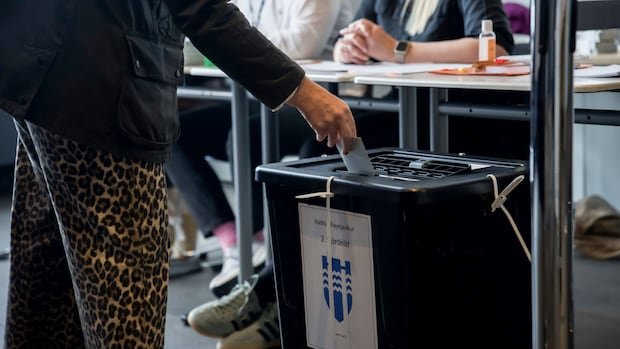

Voters in Iceland headed to the polling stations on Saturday to make a decision on whether to restart talks to join the European Union, amid concerns over U.S. President Donald Trump’s interest in controlling nearby Greenland.
The referendum question was straightforward for the approximately 265,000 eligible voters: Should Iceland resume negotiations with the European Union? A positive vote would kick off discussions with the EU’s executive body, the European Commission, covering various areas like the economy and human rights. Proponents believe that EU membership could offer protection against potential threats from Trump and bring economic stability.
However, if the proposal is turned down, the chance for negotiations will be shelved for at least a generation. Critics fear that EU membership could jeopardize Iceland’s valuable fishing industry, and argue that the country already benefits from being part of the EU’s single market and the Schengen area.
Experts anticipate a tight race, with over 20% of voters having already cast their ballots before the referendum day, according to Iceland’s national broadcaster RÚV.
Trump’s aspirations for Greenland have stirred concerns in Iceland, located just 290 kilometers away from the Danish territory. The possibility of Iceland being targeted after Greenland is a worry for many, leading to the question of whether EU membership could serve as a shield against potential U.S. ambitions in the North Atlantic.
Iceland’s current left-leaning coalition government, elected in 2024, views EU membership as a strategic move in the face of uncertainties with the U.S. “We can’t really trust the U.S. anymore,” said Hildur Knútsdóttir, expressing support for EU membership.
The debate over EU membership in Iceland has a long history, with the country formally ending its previous attempt to join in 2015 due to concerns about the impact on its fishing resources. Fishing is a crucial part of Iceland’s national identity, deeply rooted in its history and culture.
As the referendum nears, Prime Minister Kristrún Frostadóttir has emphasized that the vote is not the final decision, hinting at another referendum if Iceland reaches a membership agreement with the EU.
The issue of EU membership is seen as pivotal for Iceland, with supporters advocating for closer ties with Europe to address cross-border issues like climate change. They also argue that adopting the euro would bring more stability compared to Iceland’s current currency, the króna. In contrast, opponents believe that Iceland already enjoys the benefits of European integration without sacrificing its sovereignty, pointing to trade agreements with countries like China as more favorable.
The national identity and cultural heritage of Iceland are at stake in this crucial decision, with the outcome likely to shape the country’s future path.