

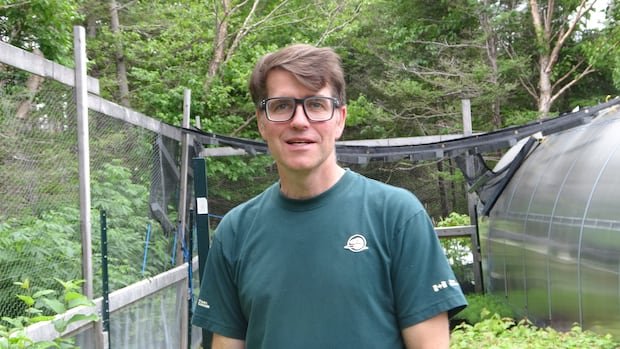

Crews in western Newfoundland are working on a large-scale tree planting project in Gros Morne National Park to aid in the recovery of forests impacted by a once-prolific moose population. According to Darroch Whitaker, an ecosystems scientist with Parks Canada, approximately 730,000 trees have been planted since 2023 in areas previously transformed into grasslands by extensive moose grazing.
The planting initiative is set to continue for an additional three years with a goal of planting 1.25 million trees, covering a total area of around four square kilometers. The focus is not solely on restoring the previously forested areas but also on creating resilient forests capable of withstanding the effects of climate change by selecting tree species adaptable to warmer temperatures.
Whitaker emphasized the importance of choosing trees that can thrive for the next century, taking into account anticipated climate shifts. Gros Morne National Park, known for its dramatic landscapes, vast forests, and waterways, spans 1,805 square kilometers and was established in 1973 as the second-largest national park in Atlantic Canada.
The moose population in the park, which once numbered around 6,500 in the 1990s, has been reduced to approximately 2,000 through controlled hunting efforts. The overabundance of moose had led to significant damage to the park’s vegetation, with some areas witnessing high moose densities that had never been recorded before. The unchecked grazing of moose prevented natural forest regeneration, resulting in barren patches known as “moose meadows.”
Since opening the park to controlled hunting in 2011, the moose population has been managed to a more sustainable level, allowing for the restoration of damaged areas. In 2023, tree planters began reintroducing young saplings into these cleared regions as part of the reforestation strategy.
The new trees, including black and white spruce, balsam fir, as well as unique species like yellow birch and white pine, are carefully selected to ensure long-term adaptation to changing climate conditions. By incorporating trees and seeds from the southern region of the park, where warmer temperatures are expected, the project aims to assist the natural migration of plant species due to climate shifts.
Whitaker and his team are closely monitoring the growth of the planted saplings, many of which are nurtured at the Rocky Harbour tree nursery. The endeavor not only aims to restore the park’s ecosystem but also to create a more resilient and diverse forest landscape for future generations to enjoy.