

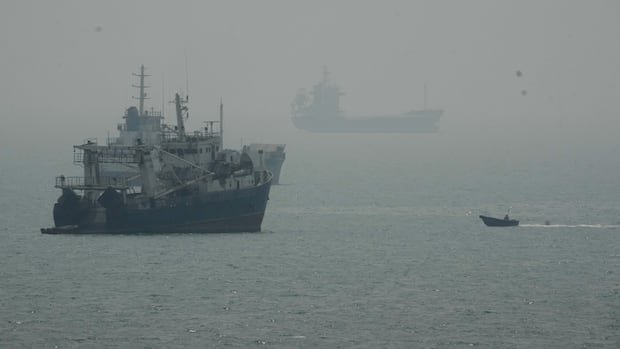

Iran announced on Wednesday that it had conducted attacks on 10 ships near the Strait of Hormuz following the sinking of five Iranian oil tankers by the United States. This exchange marked the most significant series of retaliatory strikes on shipping by both sides since the onset of the six-month-long conflict. The Islamic Revolutionary Guard Corps (IRGC) of Iran retaliated by launching ballistic missiles at a U.S. base near Al Azraq in eastern Jordan and targeting two U.S. vessels along with eight oil tankers trying to navigate through a restricted area in the Strait of Hormuz.
These incidents in and around the crucial water passageway caused a surge in oil prices, with the international Brent crude benchmark surpassing $100 per barrel for the first time since July. The conflict has disrupted oil markets, with hopes of a resolution between the U.S. and Iran dashed. Additionally, escalating hostilities between Saudi Arabia and the Iran-aligned Houthis in Yemen have added to the energy market uncertainties. The Houthis recently launched attacks on Saudi cities, resulting in extensive damage to oil facilities and injuries.
The impact of the conflict is being felt by American consumers at gas pumps, as prices for regular gasoline and diesel have risen significantly compared to a year ago. The current geopolitical tensions have led to soaring fuel costs, prompting concerns ahead of the upcoming U.S. midterm elections.
The ongoing crisis has also affected Canada, with gas prices surging by 25 to 40 percent since the conflict began. In response, the Canadian government has extended a gas tax holiday until the end of January. The situation remains volatile, as both Iran and the U.S. continue to engage in military actions and threats in the region.
Iran has declared a wider maritime restricted area extending from Chabahar in Iran to parts of the Gulf of Oman and the Arabian Sea. This move follows Iran’s intention to establish a restricted zone outside the Strait of Hormuz. Furthermore, reports emerged of a drone strike on a tanker carrying Iraqi fuel oil in Iraqi territorial waters, causing a fire but no casualties among the crew.
The Strait of Hormuz, a vital route for global oil transportation, has been significantly disrupted by the conflict, impacting the flow of oil and natural gas. Efforts by the U.S. to guide tankers through the strait have been met with resistance from Iran, leading to a complex situation in the region. The conflict shows no signs of abating, with both sides continuing to engage in military actions and threats.