

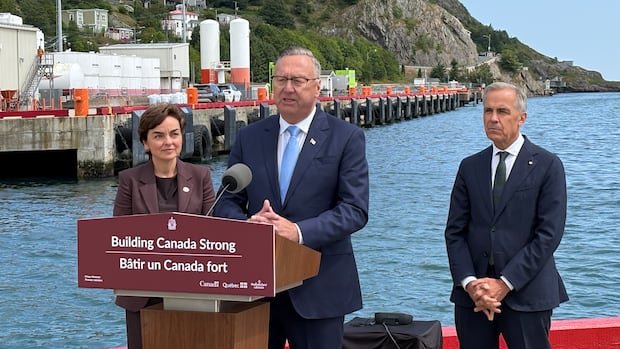

Ottawa has announced what is being hailed as the largest clean energy investment in North American history. Prime Minister Mark Carney, along with N.L. Premier Tony Wakeham and Quebec Premier Christine Fréchette, unveiled a new agreement for Churchill Falls and other electricity projects in Labrador during a gathering in St. John’s.
The agreement includes a $10 billion funding commitment from Ottawa to enhance the Churchill Falls generating station, develop the Gull Island hydroelectric project, construct transmission lines, and establish a 2,000 MW onshore wind energy project in Labrador. These initiatives, totaling nearly $70 billion, are set to significantly increase the generating capacity of Churchill Falls, enough to power the homes in Toronto, Montreal, and Vancouver combined.
The projects are expected to generate 23,000 jobs and provide Quebec with a reliable power source while offering Newfoundland and Labrador the opportunity to boost revenue from natural resources and alleviate debt. Furthermore, a 15% rebate on electricity bills for N.L. ratepayers is anticipated to save households an average of $351 annually.
Described as a “win-win-win” by Wakeham, the revised agreement between Newfoundland and Labrador Hydro and Hydro-Quebec promises increased value for N.L., estimated at $49 billion in net present value. Scheduled until March 31, 2027, the new agreement includes potential expansions to the Churchill Falls facility and upgrades to increase capacity by 23.5%, among other enhancements.
The deal also guarantees transmission access of 985 megawatts through Quebec, allowing Newfoundland and Labrador to sell excess power to other markets. The agreement aims to empower Newfoundlanders and Labradorians to benefit more from their resources and exercise greater control over their economic development.
In addition to the energy projects, Ottawa will support the expansion of Labrador’s mining industry with financial assistance. However, uncertainties loom over the agreement’s future, particularly with the upcoming Quebec election and potential changes in leadership. Fréchette emphasized the benefits the deal brings to Quebec and questioned the alternatives proposed by opposing parties.
Overall, the agreement represents a significant milestone in clean energy investment and economic development for the region, with a focus on sustainability and job creation.