

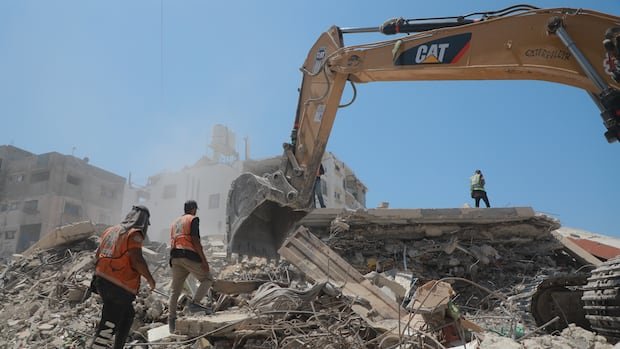

In Gaza City, members of the Al-Drimli family are engaged in a painstaking search for a neighbor’s remains buried under the debris of their demolished residence. Armed with basic tools like shovels, buckets, and a wheelbarrow, they toil silently under the scorching sun, surrounded by the clang of shovels and the whir of an electric saw.
Their efforts are a small dent in the vast piles of rubble left behind by an airstrike in November 2023 that razed a six-story residential building. Having already recovered the remains of their own family members, the Al-Drimlis now seek closure for their missing neighbor.
The scarcity of excavators in Gaza has compelled many, including this family, to rely on manual labor due to the high costs and limited availability of machinery. According to the Gaza Health Ministry, an estimated 8,000 to 10,000 bodies are still trapped under the rubble nearly three years after the conflict between Israel and Hamas began.
Ayman Al-Drimli explained to a freelance videographer that the exorbitant costs and scarcity of equipment have forced them to work with their hands. The few remaining excavators in Gaza face significant challenges in maintenance, with a severe shortage of spare parts, oil, and fuel.
Samir Sabra, along with his son Uday, operates two of the scant excavators in the region. Samir emphasized the financial strain of running the machines, with the cost of oil alone exceeding their budget. The limited availability of equipment has led to an overwhelming demand for their services, as they struggle to keep up with the ongoing search and recovery operations.
Despite the ceasefire agreement last October promising improved access to heavy machinery, the situation on the ground remains unchanged. Mahmoud Basal, a spokesperson for the Palestinian Civil Defence, highlighted the deliberate targeting of heavy equipment during the conflict, prolonging the process of recovering remains.
The ongoing restrictions on fuel, oil, and spare parts by Israeli authorities have hindered humanitarian efforts to maintain essential machinery in Gaza. Calls have been made by international organizations to ease these restrictions and expedite the retrieval efforts from the rubble.
Uday Sabra, undeterred by the challenges, persists in his excavation work, aiming to provide closure for the families of the deceased. The arduous task of recovering bodies from the rubble is expected to continue for years without adequate access to heavy machinery and resources.