

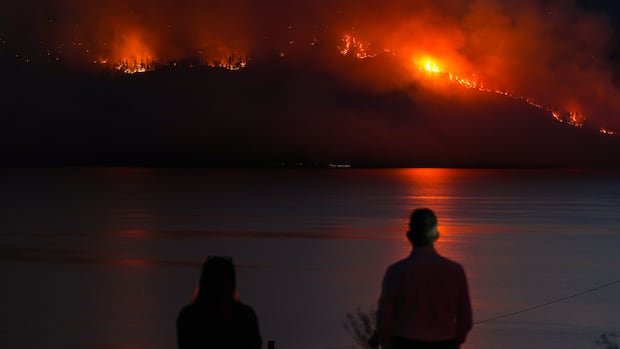

In the realm of climate phenomena, the resurgence of the Pacific Ocean’s disruptive warming event, known as an “extraordinary” El Niño or a “massive” El Niño, is making a significant impact, coinciding with a period of heightened global temperatures. The recent month of July marked the hottest on record for North America and Europe, where relentless heatwaves have resulted in numerous heat-related fatalities, desiccated waterways, and charred landscapes. Notably, Canada has already witnessed over 4.1 million hectares of forest engulfed in flames, emitting thick smoke that veiled a substantial portion of the eastern regions of the country and parts of the northern United States.
While the scorching summer coincided with the onset of an El Niño event, climate experts assert that this natural occurrence is not the direct cause of the recent extreme weather calamities. Nevertheless, there is growing concern that this El Niño could exacerbate the already intense weather patterns fueled by human-induced climate change.
As affirmed by Josh Willis, a climate scientist at NASA’s Jet Propulsion Laboratory, the impending impacts of El Niño are expected to be extensive and far-reaching across a vast expanse. Willis also emphasized the unpredictability of the situation, warning that turbulent times lie ahead.
El Niños typically manifest every three to seven years, commencing in spring and persisting well into the subsequent year, as the ocean surface temperature in the Pacific equatorial region where they originate rises at least 0.5 degrees Celsius above the norm. This warming generates atmospheric shifts that lead to altered weather patterns, causing regions that are usually arid to experience heavy rainfall, while previously wet areas may face drought conditions.
Although this El Niño event began shaping up in May and June, coinciding with the onset of heatwaves and wildfires in the northern hemisphere, its effects are often not felt in northern regions like Canada until the peak months of late fall and winter. Nevertheless, Muhammad Azhar Ehsan, a scientist at the Center for Climate Systems Research (CCSR) at Columbia University, acknowledges the unprecedented nature of this El Niño, speculating on its potential contribution to the ongoing heatwaves and wildfires.
Ehsan suggests that this El Niño could rival the intensity of the 2015-16 and 1997-98 events, which were the most forceful El Niños recorded since 1950. Looking ahead, models indicate that a warmer winter than usual is anticipated for much of Canada and the northern U.S. due to this El Niño, with British Columbia’s typically damp south coast likely to experience reduced precipitation and diminished snowpack.
Moreover, the southern U.S. is poised for a wetter winter as a consequence of this climatic phenomenon. Current observations in tropical regions, particularly Peru and Ecuador, reveal the looming impact of El Niño, with warm waters posing threats to local fisheries. Meanwhile, Indonesia is grappling with an extended and intense wildfire season, underscoring the global reach of El Niño’s effects.
Notably, the hurricane season in the Eastern Pacific has already shown heightened activity, with several named storms forming, including the powerful Hurricane Genevieve. El Niño conditions tend to suppress tropical storm and hurricane formation in the Atlantic Ocean while amplifying storm activity in the Eastern Pacific due to warmer sea temperatures.
The record-breaking heatwaves and wildfires experienced this summer are attributed to human-induced climate change, which has resulted in consecutive years of record-high temperatures, according to Zachary Labe, a climate scientist at Climate Central. El Niño, although a temporary influence, could intensify the prevailing global warming trend, defying traditional climate projections.
As El Niño continues to evolve, its impacts are expected to endure well into the following year, with the accumulated oceanic heat gradually transferring into the atmosphere over the coming months. The implications of this El Niño event are likely to persist for at least the next six to twelve months, shaping global weather patterns and reinforcing the urgency of climate action.