

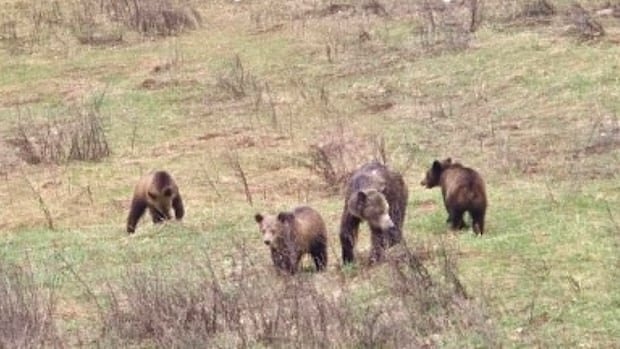

In an official statement released on August 14, the B.C. Conservation Officer Service announced the euthanization of a mother grizzly due to public safety concerns arising from the animal’s food-conditioned behavior and lack of fear towards humans. Following this action, the two remaining yearlings were safely relocated to an undisclosed location for continued monitoring, as confirmed by the CBC News. The service declined to provide any further comments on the matter.
A protest rally unfolded in Nelson, British Columbia, on Thursday in response to the decision made by the B.C. Conservation Officer Service to put down a young grizzly bear. The bear belonged to one of the two grizzly families that have garnered attention for their presence in and around Nelson.
Katie Graves, the founder of the Ursa Project Society, described the emotional atmosphere at the rally, where community members expressed their dismay over the incident. The bear in question, a yearling with either a leg injury or deformity, was perceived by Graves as capable of survival, as it was observed moving with its family and feeding adequately.
The Ursa Project Society emphasized that the bear’s mobility, even with its physical challenge, should have spared its life, citing examples of bears living with similar conditions thriving in the wild. The B.C. Conservation Officer Service justified its decision based on the bear’s age, injury, and history of conflict, deeming it unsuitable for rehabilitation or relocation.
Regarding the status of the other family members—a sow and two yearlings—the Conservation Service has not provided updates but assured that any captured bears will undergo assessments for determining the next course of action. The incident has triggered a wave of community reactions on social media, with many criticizing the decision to euthanize the grizzly bear.
Experts like wildlife biologist Clayton Lamb have highlighted the importance of implementing stricter policies to mitigate human-bear conflicts, with an emphasis on managing attractants that draw bears into urban areas. Lamb underscored the challenges of rehabilitating habituated bears and stressed the need for proactive measures to prevent future conflicts.
The City of Nelson, in response to the incident, outlined its efforts to minimize conflicts and preserve the wild nature of bears. Initiatives include installing bear-resistant garbage cans, conducting public education programs, and enforcing regulations on waste and wildlife attractants to uphold coexistence with wildlife in the region.