


Recent weather forecasts indicate the possibility of Britons experiencing ice pellets and freezing rain in a new cold spell this winter.
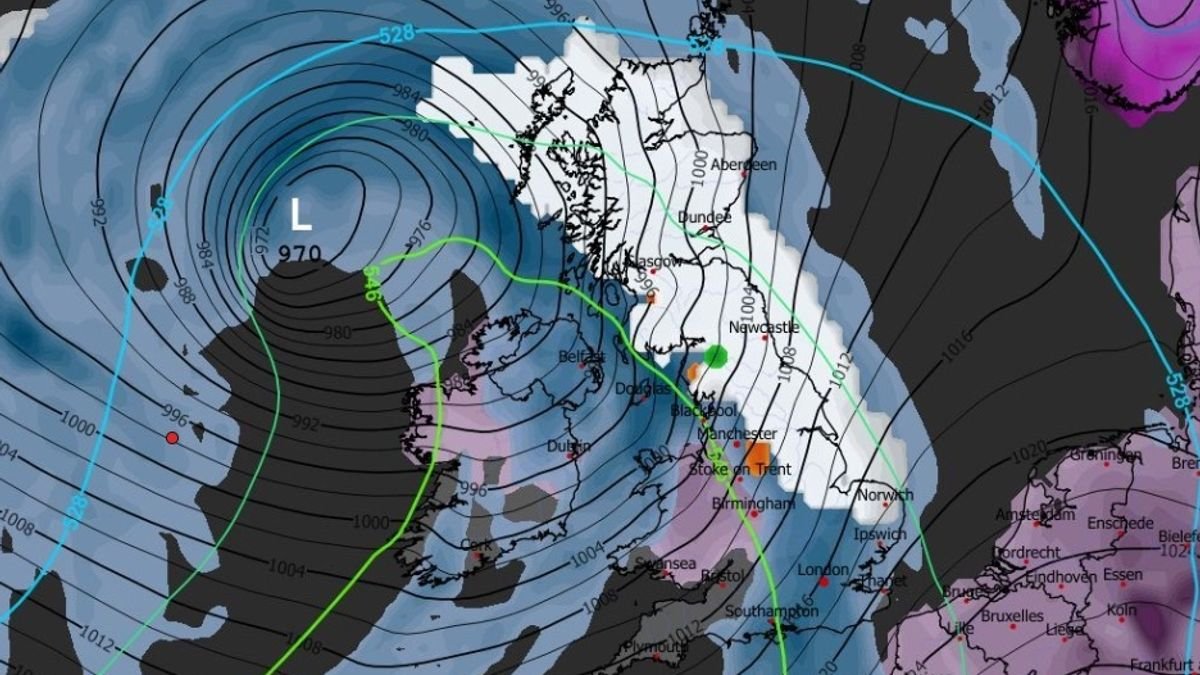
According to the GFS model maps, unusual and potentially risky weather phenomena are expected to affect the UK on February 1 as snow and rain move across the nation. The maps suggest approximately half an inch of snowfall early on February 1, with the West Midlands and the north-west facing the brunt of a snow band extending up to Belfast and Glasgow.
The maps also show lighter snow in the north-east, accompanied by areas of freezing rain depicted in orange around Snowdonia. Subsequently, thicker snowfall is anticipated to spread to the north-east, the East of England, and the eastern regions of Scotland, with additional patches of freezing rain forecasted near the Peak District and Ayr.
Green markings on the maps indicate the likelihood of ice pellets near Carlisle and the Scottish Borders. By noon, the forecast suggests that the snow will advance north towards eastern Scotland, while the majority of the UK, except London and parts of the south-east, will experience rainfall instead. Freezing rain is expected around Loch Lomond and Northumberland.
The Met Office’s extended forecast for January 24 to February 2 suggests a turn to colder conditions during this period, increasing the possibility of snowfall, particularly on hills in Scotland and northern England.
Explaining the formation of freezing rain, the Met Office describes how snow transforms into rain after passing through warm air, then refreezes upon encountering cold air, resulting in “supercooled” liquid droplets with sub-zero temperatures. The impact of freezing rain includes hazardous conditions on the ground, posing risks for air travel, road navigation, and pedestrian safety.
In a similar process, ice pellets form when snowflakes partially melt before re-freezing into small, grain-like particles upon entering sub-freezing air. These pellets, denser than snow but smaller than hailstones, accumulate on the ground and have a tendency to bounce upon impact, typically occurring in brief showers.
For quick access to valued news, select Daily Mirror as a ‘Preferred Source’ on Google News.
At Reach and across our entities , we and our partners utilize data collected through cookies and other identifiers to enhance site experience, analyze usage patterns, and deliver personalized advertising. You can opt out of data sharing or selling anytime by clicking the “Do Not Sell or Share my Data” button at the bottom of the webpage. Please note that preferences are specific to each browser. Your use of our website and services signifies agreement to the use of cookies and consent to the practices outlined in our Privacy Notice and Terms and Conditions.