

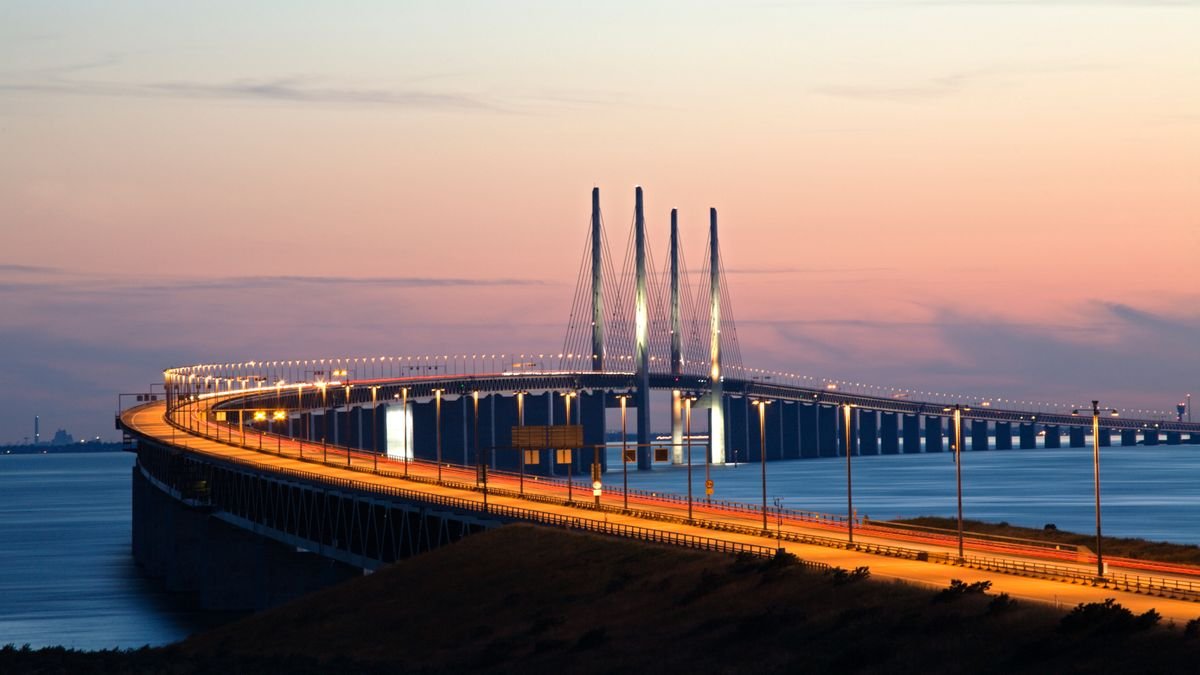

Travelers can now explore Denmark and Sweden in a single day, thanks to a remarkable bridge that seems to disappear into the ocean. Known as Øresund in Danish and Öresund in Swedish, this architectural wonder starts as a bridge and seamlessly transitions into a tunnel underwater. Completed in 2000, the Øresund Bridge links Copenhagen and Malmö, serving as the second-longest bridge in Europe after the Kerch Bridge in Crimea.
Beyond being a mere crossing point, the Øresund Bridge symbolizes unity and collaboration between Denmark and Sweden, as well as within the broader European community. The structure includes an 8km bridge, a 4km underwater tunnel doubling as an artificial reef, and a manmade island called Peberholm, left untouched for environmental preservation. With an average daily footfall of 70,000 individuals, the bridge accommodates both road and rail traffic.
Built over five years at a cost of £2.3 billion (£4.8 billion today), the Øresund Bridge project was a joint venture between Swedish company Svedab and Danish firm A/S. The toll fees vary based on the vehicle type, with motorcycles paying £25.68, cars £50.77, and vans or motorhomes £178.55. The inclusion of a tunnel was a deliberate choice to prevent interference with radio signals from Copenhagen Airport and to ensure a navigable shipping channel regardless of weather conditions.
More than 25 years since its inauguration, the Øresund Bridge has significantly boosted economic opportunities for both Denmark and Sweden, fostering a bustling trading region of 4.2 million inhabitants known as the Øresund Region. Recognized with the IABSE Outstanding Structure Award, the bridge has also left its mark in popular culture, prominently featured in the acclaimed TV crime drama The Bridge, enhancing its cultural significance and global recognition.