

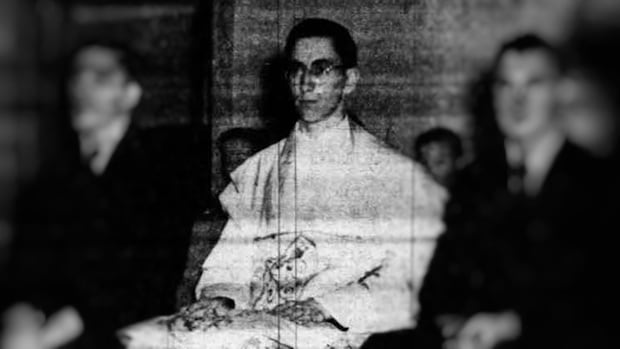

The initial correspondence is dated March 31, 1970.
Father Leonard Joseph Kelly was instructed to vacate his parish swiftly, as the bishop felt there were no alternatives.
“It appears that you have been involved in these actions for an extended period,” states the letter from John Michael O’Neill, who was the bishop of Grand Falls at that time. “You need to make immediate arrangements to leave Baie Verte permanently. To prevent scandal, you may claim that you have been unwell and require medical attention.”
The language used is unclear; the bishop does not specify the exact nature of the priest’s actions, merely describing it as a “problem” that is much more “deep-seated” than previously understood.
O’Neill urges Kelly to be candid and honest while emphasizing his preference for confidentiality.
“I considered convening a meeting of the consultors but opted against it out of concern that something might be leaked,” O’Neill wrote.
Instead of notifying the authorities, recently uncovered letters reveal that the bishop referred the priest to the Southdown Institute, a contentious therapy center near Toronto known for treating priests with various issues, including alcoholism, depression, and pedophilia for many years.
These letters, found in Kelly’s personnel file at the Roman Catholic Episcopal Corporation of Grand Falls, are now central to an unusual legal case in central Newfoundland.
The church’s own insurance company is pursuing a Norwich order, a rare legal action that compels a third party to produce crucial documents potentially leading to a lawsuit against another party.
In this instance, Guardian Insurance is requesting a judge to order the Southdown Institute to provide its records on Kelly to clarify the reasons for his admission there in 1970.
Guardian suspects that these documents may indicate the church was aware of Kelly’s potential danger to children before entering into an insurance agreement in the 1980s. Such records could instigate another court case, where Guardian would aim to avoid liability for the Roman Catholic Episcopal Corporation of Grand Falls concerning Kelly’s abuses during its policy period due to material non-disclosure or misrepresentation.
I cannot be expected to condone the seriousness of his betrayal of confidence and the terrible scandal which, but for the discretion of the family involved, could have blighted the whole life of the church in this small province.Bishop John Michael O’Neill
The church is currently facing litigation, initiated in 2022, alleging Kelly committed sexual abuse in Gander.
The complainant claims he was “subjected to regular and frequent forced oral sex and occasionally other invasive sexual touching by Kelly” between 1977 and 1983, when he was between six and twelve years old.
Kelly was also found guilty of sexually assaulting two 12-year-old boys in the mid-1980s. A provincial court judge sentenced him to two years of probation, contingent on his return to the Southdown Institute for treatment.
However, the province’s court of appeal deemed this sentence inappropriate, instead sentencing Kelly to four months in jail in 1988.
Bishop credited family’s ‘discretion’ in avoiding scandal
The Roman Catholic Episcopal Corporation of Grand Falls serves as the church’s governing body for larger areas such as Grand Falls-Windsor and Gander, as well as numerous smaller churches scattered throughout the rural regions of the island.
Father Kelly, originally from Windsor, was ordained in 1955. He was welcomed into the priesthood by Bishop O’Neill during a ceremony in his hometown attended by 500 individuals “eager to honor the young cleric,” according to a June 9, 1955 article in the Advertiser.
The exact date of his relocation to Baie Verte remains unclear.
Three months after Kelly was instructed to depart the parish, Bishop O’Neill began communicating with the Southdown Institute regarding Kelly’s progress. The first letter references a psychiatric assessment conducted after his admission, characterizing his actions as “rather pathetic homosexual adventures” driven by alcoholism.
“I do not believe the sexual incidents will pose any future issues if this priest successfully separates himself from alcohol,” the letter states.
The evaluator recommended that Kelly be reinstated in the priesthood within the Diocese of Grand Falls.
“It is believed that once returned to ministry, Father Kelly should not be removed from the diocese, as sexual issues represent only a minor aspect of his overall inability to adapt. Rather than being removed from his home diocese, he should be given significant support in addressing his primary alcoholic challenges.”
Bishop O’Neill replied two weeks later, resisting this recommendation.
“It must be evident to him, as it is to me, that he was fortunate to leave Baie Verte without his name being tarnished,” O’Neill stated. “There could have easily been a court case with all its unpleasant ramifications. Even he should understand that this is not simply a matter of picking up where he left off.”
The bishop suggested that Kelly be temporarily relocated to Halifax.
“While I feel sympathy for Father Kelly, as I would for any unfortunate priest in distress, I cannot condone the gravity of his breach of trust and the dreadful scandal which, were it not for the discretion of the involved family, could have tarnished the entire church’s reputation in this small province.”
The response from Southdown’s executive director, John Kelly, nearly outlined the nature of the allegations against the priest without explicitly mentioning them.
“I am acutely aware that his behavior could have led to a widespread scandal, and I am thankful that this was avoided,” the director wrote. “The more we observe Father Kelly, the more convinced we become that he is capable of making a good recovery. His motivation appears to be strong, and it is increasingly clear that prolonged drinking had removed, as it often does, the restraints he would typically maintain in his interactions with the boys involved.”
He further suggested finding Father Kelly an assignment near the Southdown Institute in Ontario, allowing for oversight before his return to Newfoundland.
O’Neill agreed and informed Father Kelly on July 30, 1970, that he would begin in Ontario and subsequently transition to Halifax, with the objective of eventually returning to Newfoundland.
“It is evident you were a seriously ill and confused priest,” O’Neill wrote. “As it stands, we are fortunate that the situation did not become public, causing irreparable harm to the Church and the priesthood. Thankfully, all that is behind us, and I am glad to move on from this issue and look forward to your future contributions in the holy priesthood.”
Records indicate that Kelly took on a pastoral role in Gander in 1977, later returning to Grand Falls-Windsor in 1983.
Bishop O’Neill passed away in 1974, not living to witness the repercussions of his decision to “forget the whole thing.”
Court filing seeks to uncover Winter Commission mystery
Kelly was among the first group of Catholic clergy and Christian Brothers to face criminal charges in the late 1980s. What began as a few allegations evolved into a surge of claims, prompting Archbishop of St. John’s, Alphonsus Penney, to advocate for a commission of inquiry.
“It’s a great mystery to me how such a thing could go on for so long without somebody blowing the whistle,” Penney remarked to CBC News in 1989.
The Winter Commission report, released in 1990, revealed that allegations of sexual misconduct dated back to at least 1975 — the same year Penney sent a priest from the Diocese of Grand Falls to the Southdown Institute over allegations of pedophilia. Penney did not report the priest to authorities, and the Winter Commission did not uncover the priest’s identity.
Guardian Insurance is now requesting the court to compel Southdown to provide its records concerning both the unnamed priest and Father Leonard Joseph Kelly.
“Guardian has a reasonable basis to suspect that the offending priest was Kelly, or alternatively another Grand Falls priest whose attendance at Southdown was triggered by inappropriate interactions with a child, thus the identification of the priests in the Southdown records would be pertinent to Guardian’s coverage investigation,” the company’s application asserts.
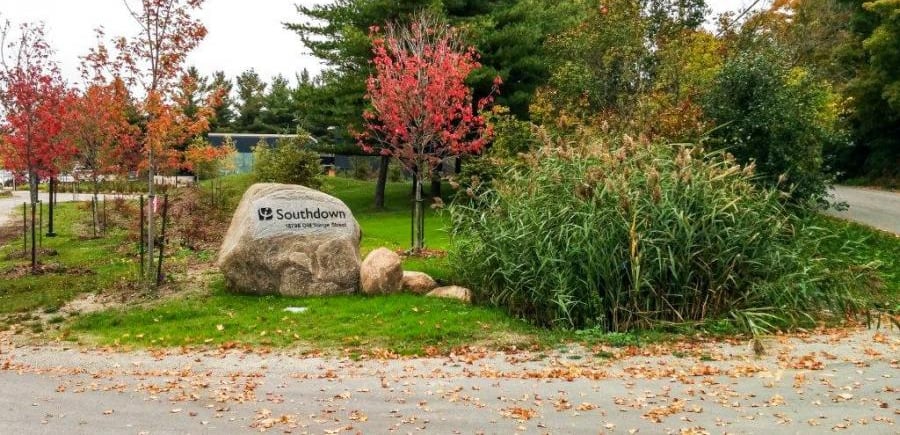
The Southdown Institute employs a team of psychologists and psychiatrists who primarily assist clergy dealing with various mental health challenges such as alcoholism and depression. It has also treated priests accused of child abuse. (Southdown Institute website)
The Winter Commission discovered that church authorities in Newfoundland and Labrador have relied on Southdown for various reasons, beginning with the unidentified priest in 1975.
The letters uncovered by Guardian Insurance indicate that this reliance existed at least five years earlier than previously acknowledged.
In total, the Winter Commission report mentioned five priests from Newfoundland who were sent to Southdown, including four accused of inappropriate relationships with minors.
“The Southdown facility seems to have been perceived as a quick solution for nearly any behavioral issue,” the report states.
The Southdown Institute continues to operate today, offering psychotherapy, counseling, and spiritual guidance to clergy, lay pastoral ministers, and “all adults who consider faith and spirituality essential to their lives.”
Earlier this month, attorneys for Guardian Insurance, Southdown, and the Roman Catholic Episcopal Corporation of Grand Falls appeared in court for a brief session. A hearing on the application is scheduled for January 26, 2027.
Download our free CBC News app to sign up for push alerts for CBC Newfoundland and Labrador. Sign up for our daily headlines newsletter here. Click here to visit our landing page.